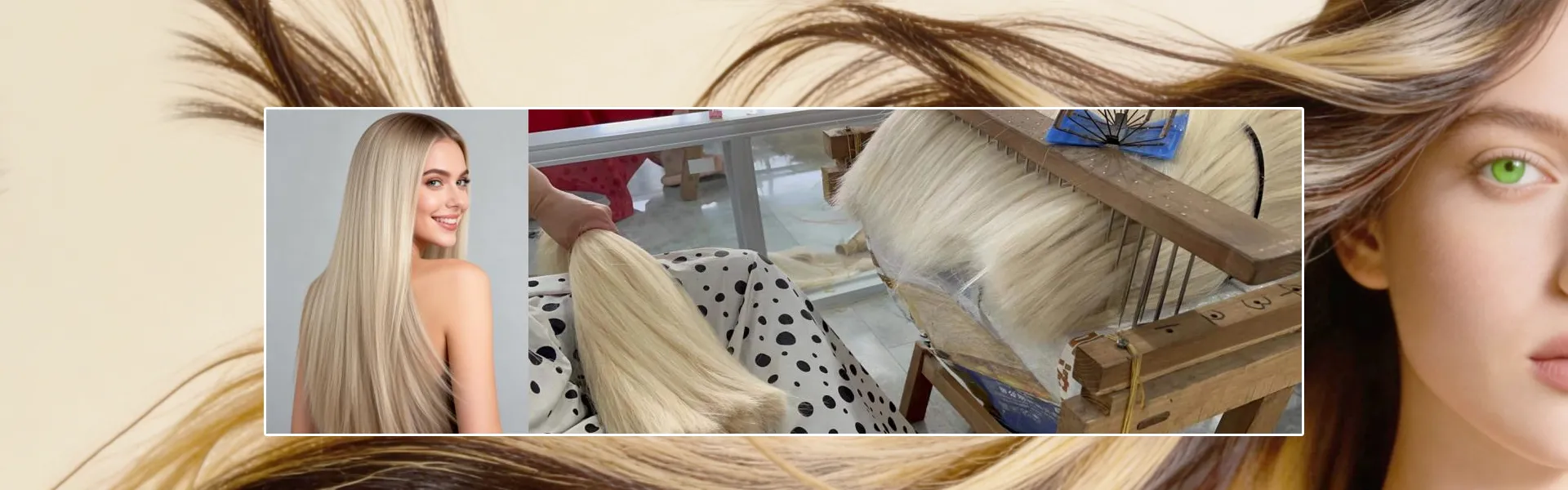
Which Weft Suits Fine Hair Better: Genius or Butterfly?
For a salon owner or a hair extension distributor, the fine-hair client is the most demanding and the most loyal. She has often tried multiple extension methods and been disappointed by bulk, visible seams, or tension headaches. When she asks for a recommendation, the answer must be precise. Two weft types dominate the conversation for fine hair: Genius Weft and Butterfly Weft. They look similar on the shelf, they are both marketed as thin and invisible, and they are often priced within the same range. But their construction, their installation requirements, and their suitability for fine hair are fundamentally different. Choosing the wrong one can lead to returns, complaints, and a lost client.
This guide is written for buyers who need to make an informed decision between Genius Weft and Butterfly Weft for fine hair applications. We will explain the construction of each weft, the role of return hair, the installation methods each requires, the performance characteristics that matter for fine hair, and the criteria for evaluating a supplier. We will also provide detailed product parameters from our factory at Qingdao Fly Lum Hair Factory. Whether you are sourcing for a salon, a distributor, or a private label brand, this guide will help you select the weft that delivers the best result for fine hair clients.
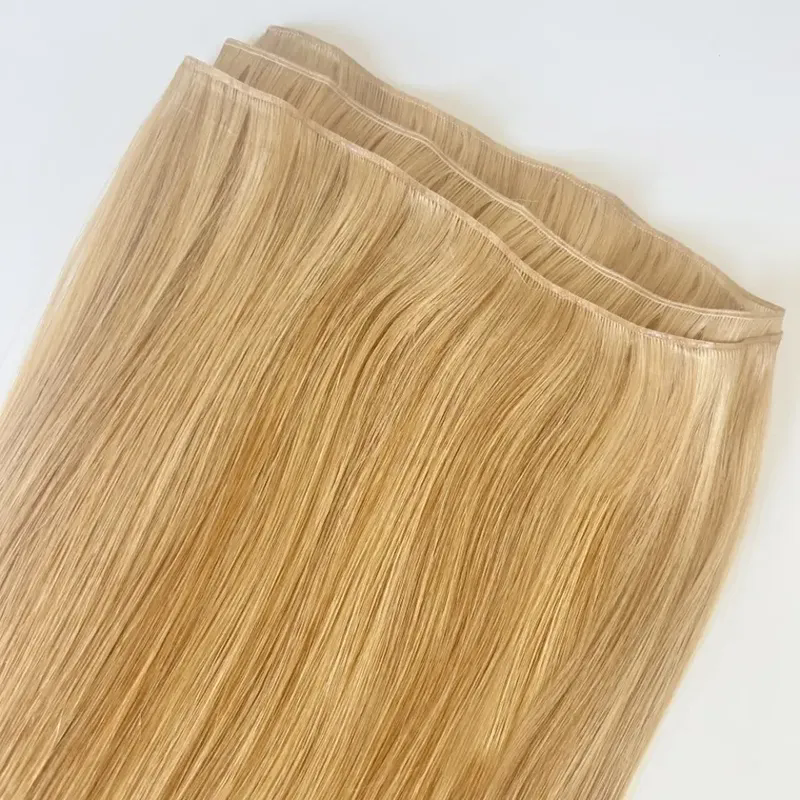
Table of Contents
- 1. What Is the Difference Between Genius Weft and Butterfly Weft?
- 2. Why Does Return Hair Matter for Fine Hair Clients?
- 3. How Do Installation Methods Affect Suitability for Fine Hair?
- 4. What Performance Characteristics Should Buyers Compare?
- 5. How Do You Evaluate a Weft Supplier for Fine Hair Products?
- 6. What Are the Key Product Parameters from Our Factory?
- 7. Frequently Asked Questions (FAQ)
- 8. Conclusion
1. What Is the Difference Between Genius Weft and Butterfly Weft?
The difference between Genius Weft and Butterfly Weft lies in their construction, specifically the base material and the presence of return hair. Genius Weft is a thin, flat weft with a narrow PU (polyurethane) edge and zero return hair. The hair is injected or sewn into the base in a way that eliminates the short return hairs that are typically found on the underside of traditional wefts. This design makes Genius Weft exceptionally flat and comfortable, especially for sensitive scalps. Butterfly Weft, by contrast, is constructed with a PU base that features pre-punched holes, or "butterfly holes," along its length. These holes are designed to allow the stylist to thread natural hair through them and secure the weft with microbeads, without sewing or glue. The base is also thin and flexible, but the presence of the holes changes the installation method and the way the weft sits against the scalp. The table below summarizes the key construction differences.
| Feature | Genius Weft | Butterfly Weft |
| Base Material | Narrow PU edge or thin thread base | PU base with pre-punched holes |
| Return Hair | None (zero return hair) | None (hair injected into PU) |
| Installation Method | Sew-in with beads or braids | Microbead threading (no sewing) |
| Cuttable | Yes (can be cut to size) | Yes (can be cut, but holes are fixed) |
| Thickness | Ultra-thin (approximately 0.78mm) | Thin PU base (varies by manufacturer) |
At Qingdao Fly Lum Hair Factory, our factory has been manufacturing Genius Weft for over 23 years. We have refined the production process to achieve a consistently thin, flat weft with zero return hair. We also produce other weft types for different applications. Our engineering team can help you compare the construction details of Genius Weft and Butterfly Weft to determine which is better suited to your fine hair clients.
2. Why Does Return Hair Matter for Fine Hair Clients?
Return hair is the short, blunt-cut hair that is folded back over the weft base during traditional weft manufacturing. It is the hair that sits against the scalp and provides padding and structure to the weft. For clients with thick hair, return hair is rarely a problem. It is hidden by the natural density of the hair and does not cause significant discomfort. For fine hair clients, however, return hair is a critical issue. Fine hair has less density and less coverage. The return hair can poke through the natural hair, causing itching and irritation. It can also create visible bulk at the root, making the extension seam detectable. And it can add unnecessary weight to the weft, which increases tension on the natural hair and can lead to breakage or traction alopecia.
Genius Weft is specifically designed to address this problem. By eliminating return hair entirely, Genius Weft removes the source of irritation and bulk. The weft lies flat against the scalp, and there is nothing to poke or itch. This makes Genius Weft particularly suitable for fine hair clients who have sensitive scalps or who have experienced discomfort with traditional wefts. Butterfly Weft also avoids the return hair problem because the hair is injected into the PU base rather than folded back. However, the presence of the pre-punched holes means that the base must have some structure, which can add a small amount of bulk compared to the ultra-thin Genius Weft edge. The table below compares the return hair characteristics of Genius Weft, Butterfly Weft, and traditional wefts.
| Weft Type | Return Hair | Suitability for Fine Hair |
| Traditional Sew-In Weft | Yes (1 inch or more) | Poor (bulk, irritation) |
| Genius Weft | None | Excellent (flat, comfortable) |
| Butterfly Weft | None | Good (but holes add structure) |
At our factory, we test every batch of Genius Weft to verify that the weft is free of return hair and that the base is consistently thin. We understand that for fine hair clients, the difference of a millimeter can mean the difference between a comfortable install and an uncomfortable one. Our quality control process ensures that our Genius Weft meets the highest standards of thinness and comfort.
3. How Do Installation Methods Affect Suitability for Fine Hair?
The installation method is a critical factor in determining which weft is better suited to fine hair. Genius Weft is typically installed using a sew-in method with microbeads or braids. The stylist creates a row of beads or a braid, and the weft is sewn onto that row. This method is secure and long-lasting, but it requires the natural hair to support the weight of the weft and the beads. For fine hair, the stylist must be careful not to use too much tension, as this can cause breakage. The sew-in method also requires more time and skill than some alternative methods. Butterfly Weft, by contrast, is designed for a microbead threading installation. The stylist threads a small section of natural hair through two adjacent holes in the weft, then clamps a bead to secure it. This method does not require sewing, which can reduce installation time. However, it still requires the natural hair to support the weft, and the holes in the weft must align with the natural hair sections. For fine hair, the butterfly method can distribute the weight more evenly across the bead points, which may reduce tension. The table below compares the installation methods and their implications for fine hair.
| Installation Method | Genius Weft | Butterfly Weft | Implication for Fine Hair |
| Primary Method | Sew-in with beads or braids | Microbead threading | Both require natural hair support |
| Installation Time | 2-2.5 hours (full head) | Approximately 15 minutes (per weft) | Butterfly is faster |
| Tension Control | Depends on stylist skill | Distributed across holes | Butterfly may distribute tension better |
| Weight Distribution | Continuous along weft | At bead points | Genius is more uniform |
| Refitting Interval | 6-8 weeks | 4-6 weeks | Genius may last longer between refits |
At Lum Hair, our Genius Weft is designed to be compatible with the sew-in method that professional stylists prefer for fine hair. The thin, flat base allows the weft to sit close to the scalp without adding bulk, and the absence of return hair means there is nothing to poke or irritate. We also provide guidance on installation tension and bead placement to help stylists achieve the best result for their fine hair clients.
4. What Performance Characteristics Should Buyers Compare?
When comparing Genius Weft and Butterfly Weft for fine hair, buyers should evaluate several performance characteristics: thickness, weight, durability, and reusability. Thickness is the most important factor for fine hair. Genius Weft is among the thinnest wefts available, with a base thickness of approximately 0.78mm. This ultra-thin profile allows it to lie flat against the scalp and remain undetectable under fine hair. Butterfly Weft is also thin, but the PU base with pre-punched holes is typically slightly thicker than the Genius Weft edge, which may make it more detectable in very fine hair. Weight is the second factor. Fine hair has less capacity to support heavy extensions. A lighter weft reduces tension and improves comfort. Genius Weft is available in a range of weights, typically 50-120 grams per bundle, allowing the stylist to customize the volume to the client's natural density. Butterfly Weft is also available in various weights, but the bead-based installation may require a lighter weft to avoid tension. Durability and reusability are also important. Genius Weft is known for its durability and can be reused if properly maintained. Butterfly Weft is also reusable, but the holes may stretch or weaken over time with repeated installations. The table below compares these performance characteristics.
| Characteristic | Genius Weft | Butterfly Weft |
| Thickness | Ultra-thin (~0.78mm) | Thin PU base (varies) |
| Weight Range | 50-120g per bundle | 50-100g per bundle |
| Return Hair | None | None |
| Reusability | High (with proper care) | Moderate (holes may weaken) |
| Refit Interval | 6-8 weeks | 4-6 weeks |
| Best For | Fine hair, sensitive scalp | Fine to medium hair, quick install |
At our factory, we manufacture Genius Weft to the highest standards of thinness, comfort, and durability. We use 100% cuticle Remy human hair, which ensures that the hair remains soft, tangle-free, and reusable. We also offer customization options for weight, length, and color, allowing our customers to tailor the product to their specific market needs.
5. How Do You Evaluate a Weft Supplier for Fine Hair Products?
Evaluating a weft supplier for fine hair products requires a focus on manufacturing capability, hair quality, weft construction, quality control, and technical support. The supplier must have the capability to produce ultra-thin wefts with consistent thickness and no return hair. This requires precision manufacturing equipment and skilled technicians. The hair quality must be cuticle Remy, with all cuticles aligned in the same direction to prevent tangling and matting. The weft construction must be durable enough to withstand installation and repeated use without shedding or fraying. The quality control system must include inspection of weft thickness, return hair, and hair quality. And the supplier must provide technical support to help buyers select the right weft for their fine hair clients. The table below summarizes these evaluation criteria.
| Evaluation Criterion | What to Look For | Why It Matters |
| Manufacturing Capability | Precision weft machinery, skilled technicians | Ensures consistent thinness and quality |
| Hair Quality | 100% cuticle Remy, aligned cuticles | Prevents tangling and extends life |
| Weft Construction | Zero return hair, thin base, durable stitching | Ensures comfort and concealability |
| Quality Control | Thickness measurement, return hair inspection | Ensures every batch meets specification |
| Technical Support | Installation guidance, product selection | Helps buyers serve fine hair clients |
At Qingdao Fly Lum Hair Factory, our factory has over 23 years of experience in manufacturing Genius Weft and other hair extensions. We use 100% cuticle Remy human hair and maintain strict quality control throughout the production process. We are CE and RoHS certified, and we provide technical support to our customers to help them select the right products for their market. We invite you to evaluate us against these criteria and to consider us as your partner for Genius Weft.
6. What Are the Key Product Parameters from Our Factory?
The following table provides the key product parameters for our Genius Weft. This product is designed specifically for fine hair applications, where thinness, comfort, and concealability are paramount. Our factory can also customize the product to meet specific requirements.
| Parameter | Specification Range | Notes |
| Hair Material | 100% Cuticle Remy Human Hair | Aligned cuticles for smoothness |
| Hair Grade | 8A - 10A | Selected for quality and durability |
| Length | 14" - 24" | Custom lengths available |
| Weight | 50g - 120g per bundle | Custom weights available |
| Weft Thickness | ~0.78mm | Ultra-thin for fine hair |
| Return Hair | None | Eliminates irritation and bulk |
| Base Material | PU edge or thin thread | Selected for flexibility |
| Installation Method | Sew-in with beads or braids | Professional installation recommended |
| Color Options | Dark, light, balayage | Custom colors available |
| MOQ | 10 pieces | Negotiable for large orders |
| Lead Time | 1 - 3 weeks | Depends on quantity and customization |
At our factory, we manufacture our Genius Weft to meet these specifications and more. We can customize the length, weight, color, and base material to suit your specific requirements. Our quality control system includes inspection of hair quality, weft thickness, and return hair before shipment. Our goal is to provide our customers with high-quality Genius Weft that meets the needs of their fine hair clients.
7. Frequently Asked Questions (FAQ)
Question 1: Is Genius Weft or Butterfly Weft better for very fine hair?
Answer: For very fine hair, Genius Weft is generally the better choice. Its ultra-thin base (approximately 0.78mm) and zero return hair make it the flattest and most comfortable option available. The absence of return hair eliminates the risk of poking and irritation, which is especially important for fine hair clients with sensitive scalps. Butterfly Weft is also suitable for fine hair, but the pre-punched holes add a small amount of structure to the base, which may make it slightly more detectable in very fine hair.
Question 2: Can Butterfly Weft be used with a sew-in installation method?
Answer: Butterfly Weft is designed for a microbead threading installation, where the natural hair is threaded through the pre-punched holes and secured with a bead. While it may be possible to sew Butterfly Weft, the holes are not designed for sewing, and the weft may not perform as well with this method. For a sew-in installation, Genius Weft is the more appropriate choice.
Question 3: How long does Genius Weft last?
Answer: Genius Weft typically lasts 6 to 8 weeks per install, depending on the client's hair growth rate and care routine. With proper maintenance, the hair itself can last 8 to 12 months or more, and it can be reused for multiple installations. The weft should be removed and reinstalled by a professional stylist to maintain the integrity of the base and the hair.
Question 4: Does Genius Weft require special care products?
Answer: Genius Weft should be cared for with sulfate-free shampoo and conditioner, and a heat protectant should be used before styling. Avoid applying conditioner directly to the weft base or beads, as this can weaken the bond. Brush the hair gently with a loop brush, and avoid brushing wet hair. These care practices will help extend the life of the weft and keep the hair looking natural.
Question 5: What is the minimum order quantity for custom Genius Weft?
Answer: At Qingdao Fly Lum Hair Factory, our minimum order quantity for custom Genius Weft is 10 pieces. For large orders, we offer competitive pricing and flexible customization options. Please contact our sales team to discuss your specific requirements.
8. Conclusion
For fine hair clients, the choice between Genius Weft and Butterfly Weft comes down to the specific requirements of the installation and the client's comfort. Genius Weft offers the thinnest, flattest base with zero return hair, making it the superior choice for very fine hair and sensitive scalps. Butterfly Weft offers a faster installation method with distributed tension, but its pre-punched holes add a small amount of structure that may be more detectable in fine hair. For most fine hair applications, Genius Weft is the more reliable and comfortable option. At Qingdao Fly Lum Hair Factory, our factory has over 23 years of experience in manufacturing Genius Weft. We use 100% cuticle Remy human hair and maintain strict quality control to ensure that every weft meets the highest standards of thinness, comfort, and durability.
Whether you are a salon owner, a distributor, or a private label brand, we invite you to contact us to discuss your Genius Weft requirements. We can provide samples, technical data, and customized solutions. Our commitment to quality and customer satisfaction has made us a trusted partner for businesses around the world.
Contact Qingdao Fly Lum Hair Factory today to discuss your Genius Weft requirements and discover how our ultra-thin wefts can meet the needs of your fine hair clients.
Next :
-
Related News
- Why Do Stylists Prefer Genius Weft for Invisible Results?
- How Does Zero Return Hair Improve Genius Weft Comfort?
- What Makes Genius Human Hair Wefts a Practical Choice for Natural, Lightweight Extensions?
- Why Are Invisible Weft Hair Extensions Becoming the Preferred Choice for Natural-Looking Hair Transformations?
- What Makes Butterfly Weft the Most Comfortable Hair Extension Method?
- Clip-in Hair Extensions vs Permanent Hair Extensions from Professional Manufacturer China
Leave me a message